
Deep Sea Ports: Economic Viability, Prospects and Realities
by Kelvin Kagbare on Monday Mooring
Nigeria’s economic future is intrinsically linked to its vast coastline. As Africa’s largest economy, the need for efficient sea port has been stressed and canvassed by stakeholders at different conferences even as efficiency is hampered by shallow drafts, congestion, duplication of functions by government agencies and intricate corruption networks.
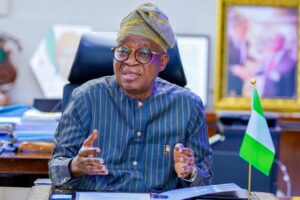
The Minister of the Marine and Blue Economy, Dr. Adegboyega Oyetola, recently signed an MoU signed in Denmark for the development of the Badagry Deep Sea Port in Lagos just as the Dangote Group is intent on the developing a strategic port facility at Olokola, Ondo State.
The Badagry, Olokola, Ibom deep sea ports could be more that needed infrastructure if the are well handled and become catalysts for transformative economic development by:
Positioning Nigeria as a Regional Maritime Hub
The Lekki Deep Sea Port, with its 16.5-metre draft and capacity to handle 1.2 million TEUs and welcoming very large vessels, reduced considerably, if it has nor ended Nigeria’s reliance on transshipments through ports of Lome and Cotonou. When the Badagry and Olokola deep sea ports come on stream, they are expected to get direct calls from major global shipping lines, reduce freight costs, and boost revenue from transit cargo destined for landlocked neighbours like Chad and Niger.
Industrialization and Job Creation
Related Posts
Stakeholders say Deep sea ports are magnets for industrial growth. Lekki is already anchoring the Lekki Free Trade Zone, driving manufacturing, logistics, and warehousing. Badagry will unlock development in western Lagos and Ogun State, while Olokola will open up Ondo’s bitumen, oil, and agricultural products. Each port is projected to create over 100,000 direct and indirect jobs in construction, stevedoring, trucking, cargo clearing, ship repair, and other ancillary services for Nigerians.
Strengthening and Boosting Non-Oil Revenue
With efficient deep sea ports, regulatory/supervisory agencies could have increased revenue collection. The new ports could enable Nigeria earn more from maritime services such as bunkering, transshipment fees, towage, chandelling, and vessel maintenance.
Maritime professional insist that deep sea ports are not just concrete and cranes. They express hope that if approved deep sea ports are delivered with supporting infrastructure, good governance, and private sector efficiency, Lekki, Badagry, and Olokola deep sea port can reposition Nigeria from a port-dependent economy to a port-powered economy by creating jobs, attracting investment, and securing Nigeria’s place as the maritime gateway to Africa
Speaking at the 2026 Annual Maritime Lecture, AMAMAL, by the Maritime Reporters Association of Nigeria, MARAN the following statements by leading Nigerian maritime experts are worth considering and reflecting on:

Hadiza Bala-Usaman “When port costs are high, they travel into the price of rice on the trader’s stall, the landed cost of raw materials for the manufacturer and into the exchange-rate pressure created when importers pay dollar-denominated charges on top of naira-denominated uncertainties. A port cannot be globally competitive if its hinterland is not competitive and Charges cannot remain frozen indefinitely while infrastructure deteriorates, but neither can users be required to pay any amount demanded. Tariffs must be linked to value and performance”
“Our objective is to create ports that can move cargo, accommodate larger vessels, reduce turnaround time and lower the cost per unit of cargo handled. The more competitive our ports become, the greater the volume of legitimate trade they will attract. The more efficient our ports become, the more attractive Nigeria becomes to investors” Minister Adegboyega Oyetola
Captain Dr. Warredi Enisuoh “You cannot modernize a port without modernizing your exit points. Nigeria must urgently deepen and expand its port infrastructure to accommodate larger vessels and compete effectively with neighboring maritime gateways. The multiplicity of agencies and processes confronting shipping agents and port users in Nigeria is of great concern”
The government and deep sea ports proponents must therefore reevaluate their Deep Sea Port Economic Viability, Prospects and Realities on ground as they embark on their respective projects in Nigeria.