
Nigeria Customs Warns on Economic Dangers of Smuggling
Edo/Delta Journalists Seek Border Integration and Cooperation
As Edo Delta Journalists Hold Workshop on Improved Relations and Economic Gains
The Nigeria Customs Service, NCS, has warned traders on the Nigeria/Benin Republic corridor to desist from evading duties payable to government of either countries thereby causing severe economic underdevelopment of both countries.
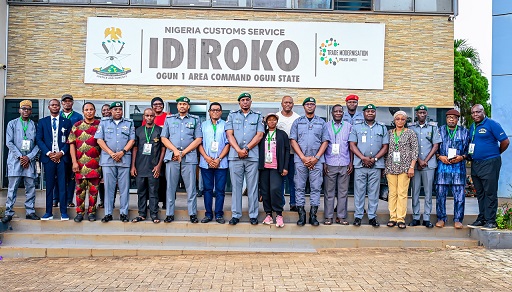
The Acting Controller of the Ogun I Area Command of the Nigeria Customs Service, Idiroko, Deputy Comptroller Abdulhamid Ibrahim, spoke at a training workshop organized by the Edo-Delta Journalists Forum in Igolo, Benin Republic.
Under the theme “Journalism Beyond Borders: Reporting Cross-Border Relations, Trade, Security, Culture and Emerging Technologies in the Nigeria-Benin Republic Corridor, the workshop examined the how to ensure enhanced border security and integration by governments of Nigeria and Benin Republic.
The Ogun 1 Customs Acting Customs Area Controller Abdulhamid Ibrahim, represented by Chief Supritendent of Customs, CSC, F.O Shaibu, Staff officer, Customs Intelligent Unit, CIU, of the Command said smuggling negates economic development of any country.
Using spaghetti as an example, he explained that a Nigerian manufacturer could sell a carton for N5,000 after accounting for production costs, electricity, workers’ salaries and taxes, while traders bringing similar products through unofficial routes could sell theirs for N3,000.
The Idiroko Customs boss warned that such price disparity weakens the competitiveness of local manufacturers, making it difficult for businesses that comply with tax and import regulations to sustain operations and remain profitable.
He advocated more effective verification of import documents and confirmation of duty payments, particularly for vehicles imported through Benin Republic before they are released into the Nigerian market.
The Acting CAC also noted that smuggling was not limited to land borders, warning that inadequate surveillance at seaports and airports could also facilitate the movement of illicit goods.
He called on the Customs Service of both nations to strengthen intelligence gathering, digital verification and background checks on companies involved in importing and receiving goods.
He also advocated investment in specialized personnel and laboratory facilities to test imported products and establish their compliance with safety and quality standards, in collaboration with relevant regulatory agencies.
According to him, improving product verification and providing credible comparisons between locally manufactured and imported goods could boost consumer confidence in Nigerian products and support domestic manufacturing.
Related Posts
Beyond enforcement, stakeholders at the workshop called for a balance between border security and the need to facilitate legitimate trade, warning that excessive restrictions could disrupt commercial activities and livelihoods in border communities.
The Permanent Secretary of the Nigeria-Benin Republic Inter-Border Forum, Dr. Bonny Abisogun Botoku, urged both countries to use diplomacy, cultural ties and traditional institutions to resolve border disputes and deepen economic cooperation.
Botoku said communities on both sides of the border shared historical, cultural and family ties, alongside economic interests that could be strengthened through coordinated policies.
He cautioned that unnecessary harassment of compliant traders and travellers could disrupt commerce, separate families and undermine livelihoods dependent on cross-border activities.
“Free movement does not mean that we should not know who is coming into the country, what they are coming to do and how long they intend to stay,” he said.
He called for closer cooperation among security agencies, traditional rulers, local government officials and other stakeholders to resolve disputes and improve the management of border communities.
Botoku also urged both governments to promote cultural festivals, arts and joint economic activities to stimulate commerce, create opportunities and strengthen relations between border communities.
The Protem Chairman of the Edo-Delta Journalists Forum, Alhaji Tunde Umar-Daniah, said the organisation would promote cross-border trade, security cooperation and regional integration through development-focused journalism.
Umar-Daniah said constructive engagement among governments, businesses, security agencies and border communities was essential to economic growth.
He said the forum would engage the governments of Edo and Delta states through policy dialogue and media initiatives to promote investment, youth empowerment, peaceful coexistence and regional development.
The workshop featured sessions on ECOWAS trade protocols, cross-border security reporting, drone technology, artificial intelligence, open-source intelligence and information technology.
Umar-Daniah urged journalists to investigate the economic consequences of smuggling, report trade barriers and promote accountability in border management.
He said stronger enforcement, efficient border procedures and closer Nigeria-Benin cooperation would help protect public revenue, improve the competitiveness of local manufacturers and expand opportunities for legitimate cross-border trade.