
The Oyetola, Duoye and Dangote Blue Economy Agenda
Nigeria's Blue Economy moves from Policy to Implementation
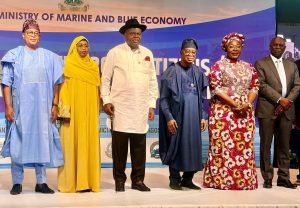
The call by Dr. Adegboyega Oyetola, Minister of the Marine and Blue Economy, for stronger synergy between the Federal Government, state governments, the private sector and development partners to accelerate the implementation of Nigeria’s National Policy on Marine and Blue Economy, has be amplified by the Bayelsa State Governor, Senator Duoye Diri and President and Chief Executive of Dangote Industries Limited, Aliko Dangote.
This synchronization of thoughts and action plans by federal, state and private sector icon, Aliko Dangote further speaks to the multi dimensionality, resourcefulness, reliability and dependability of the Blue Economy if properly managed.
Plague by policy issues, leakages, collusions and infiltration by international elements, Dr. Oyetola has a lot to do to reverse the pillaging of Nigeria’s Blue Economy by partners masquerading as investors-attested to by numerous arrests on Nigerian waters even as many others are on the prowl.
Apart from polluting and exploiting Nigerian water resources, local and foreign actors often collude to steal Nigeria’s crude oil, haul fish with trawlers and carry out illegal activities which the Nigerian Navy continues to tackle.
Reassuringly, Oyetola told participants at the Second Quarter 2026 Citizens’ and Stakeholders’ Engagement of the Federal Ministry of Marine and Blue Economy that Nigeria has moved beyond policy formulation and is now focused on implementation capable of delivering measurable economic benefits to Nigerians.
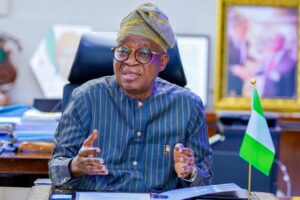
As Oyetola stated “The National Policy on Marine and Blue Economy has provided a strategic framework for harnessing Nigeria’s oceans, inland waterways, fisheries and coastal resources, what we need is coordinated action across all levels of government as many of the country’s blue economy assets were located within states and communities, making sub-national governments indispensable partners in driving investment, creating jobs, improving food security and promoting environmental sustainability”
The Minister therefore called on coastal states to align their development plans with the national policy while encouraging private investment in fisheries, aquaculture, maritime transport, tourism, shipbuilding, renewable energy and marine biotechnology.
The Bayelsa Blue Economy Agenda
In alignment, Bayelsa State Governor, Senator Duoye Diri, created its own Ministry of Marine and Blue Economy to drive the blue economy component of the state’s A-S-S-U-R-E-D Prosperity Agenda as the state goes into fish production at the Bayelsa Aquaculture Village in Yenegwe, where an operational hatchery was breeding high-quality catfish fingerlings and juveniles to boost food security and create jobs.
Related Posts
He added that the state has expanded its marine transport fleet and was aggressively pursuing the development of the proposed Agge Deep Seaport as the next maritime gateway for the Niger Delta.
The Bayelsa Governor listed five key pathways for coastal states to maximize opportunities in the blue economy:
- Establishing dedicated ministries of marine and blue economy,
- Enacting enabling legislation,
- Properly mapping and securing their maritime domains,
- Investing in credible data collection and analysis
- Developing skills, markets, innovation hubs and logistics infrastructure.
The Dangote Blue Economy Initiatives
President and Chief Executive of Dangote Industries Limited, Aliko Dangote, is of the view that the successful implementation of the National Policy on Marine and Blue Economy would depend largely on sustained private sector participation.
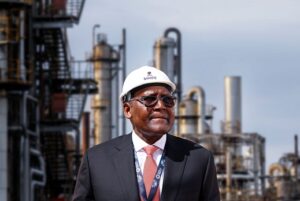
Dangote noted that industrial transformation required policy consistency, quality infrastructure, access to finance and investor confidence.
He identified infrastructure-led industrialization, value-chain development and stronger public-private partnerships as the three pillars needed to unlock the sector’s enormous potential.
Dangote agrees that the Federal Government’s approvals for major deep seaport projects in various parts of the country would stimulate industrial clusters incorporating agro-processing, petrochemicals, shipbuilding, cold-chain logistics and maritime technology, while also boosting Nigeria’s competitiveness.
He reiterated that investments in aquaculture, hatcheries, feed production, processing, cold-chain logistics and export infrastructure could reduce imports, conserve foreign exchange, create more than 500,000 jobs and position Nigeria as a leading exporter of fisheries products.
These are very lofty objectives which the Federal Government must provide the required infrastructure, legislation, level playing field for investors and ensure that the required collaboration between the public and private sectors exists to actualize the national blue ambition.