
Maritime Academy of Nigeria: Fulcrum for Nigeria’s Blue Economy Manpower
Academy and the future

By Kelvin Kagbare
Nigeria cannot be nor become a serious maritime nation without investing deliberately and intentionally in the people who operate, manage and regulate its maritime industry. At the heart of this ambition stands the Maritime Academy of Nigeria (MAN), Oron, an institution whose strategic importance goes far beyond the training of cadets.
Established to provide professional maritime education and training over four decades ago, the Academy has evolved into one of Nigeria’s most important sources of maritime manpower. Its programmes cover nautical science, marine engineering, electrical/electronic engineering and maritime transport and business management, alongside specialised seafarers’ and oil and gas professional trainings.
The Academy is therefore not simply another educational institution. It is a critical component of Nigeria’s maritime infrastructure. A country that moves the overwhelming majority of its international trade by sea must produce competent Nigerian seafarers, marine engineers, maritime administrators and shipping professionals.

Interestingly, there are encouraging signs of progress. In May 2026, MAN received ISO 9001:2015 and ISO 21001:2025 certifications, an important demonstration of its commitment to quality management and educational standards. The Academy has also expanded opportunities for its Cadets to obtain the sea-time experience essential to professional certification.
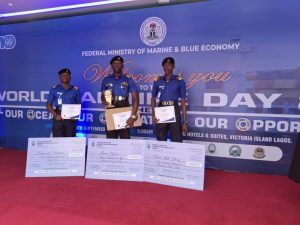
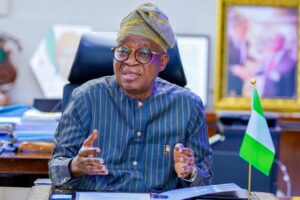
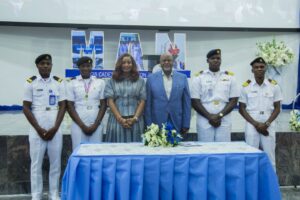
For instance, between last and this year, close to 60 seafaring cadets have been sponsored for onboard training by the NLNG Shipping and Marine Services Ltd, NSML, while other industry players such the Ship Owners Association of Nigeria, SOAN and others, have created additional sea-time opportunities for several Cadets of the Academy. Notwithstanding, celebrating this progressive stride under the leadership of Dr. Kevin Okonna, the Ag Rector of the Academy, must not blind us to the challenges Nigeria face as far as maximizing her Blue Economy potentials is concerned.
Related Posts
Nigeria still requires a much larger pool of globally competitive maritime professionals. The Academy must therefore be positioned to anticipate the future and be well prepared and positioned to deliver. Training must increasingly embrace digital navigation, automation, artificial intelligence, cybersecurity, green shipping, alternative fuels, smart ports and modern logistics.
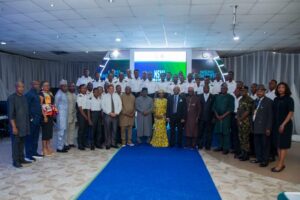
As maritime professionals agree, sea time remains critical to Cadet development. A maritime graduate without adequate practical exposure is like a medical student who has never entered a hospital. Industry partnerships with Nigerian shipowners, terminal operators and international shipping companies should therefore be institutionalised and expanded.
Reassuringly, the Okonna led management has done a lot in this and continues to collaborate and expand its reach and partners.
The current debate about the Academy’s future status also deserves careful consideration. Any transformation must preserve MAN’s specialised maritime character while giving it the institutional capacity, funding and autonomy required to compete internationally.
Nigeria’s emerging Blue Economy will not be powered by ships and ports alone. It will be powered by knowledge, competence and Nigerian professionals-nurtured by competents professionals at the Academy.
MAN Oron, must therefore be treated as a strategic national asset. Its success is inseparable from the success of Nigeria’s maritime future.
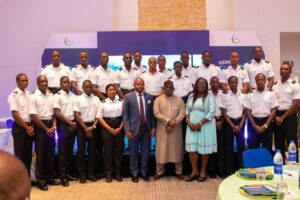
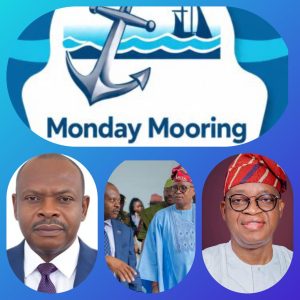
In the words of the acting Rector “Everything we do aligns with the strategic development plans of the President Tinubu’s led government for Nigerians through the ministry of Marine and Blue Economy to develop foreign partnerships and collaborations to enhance our operations and services”
As it is, the question is no longer whether Nigeria needs a strong Maritime Academy. The question is whether we are prepared to build the Academy that Nigeria’s maritime future urgently demands.